Caffeine:>is a central nervous system (CNS) stimulant of the methylxanthine class, world's most widely consumed psychoactive drug. Unlike many other psychoactive substances, it is legal and unregulated in nearly all parts of the world. Main active substance of coffee.
History
Tea drinking starts from ~3000 B.C. in China. Coffee drinking starts from ~1000 A.D. in Arabia, Africa. Tea and coffee arrived in ~1500 A.D. in Europe.
Effects
Short-term
Feeling more alert and active; restlessness, excitability and dizziness; anxiety and irritability; dehydration and needing to urinate more often; higher body temperature; faster breathing and heart rate; headache and lack of concentration; stomach pains; sleep problems and anxiety;
Long-term
Anxiety; difficulty sleeping; ulcers; osteoporosis in post-menopausal women; irritability and headaches; dizziness and ringing in the ears; muscle tremor; weakness and fatigue; rapid heart rate and quickened breathing rate; poor appetite, nausea, vomiting and diarrhoea; increased thirst, frequent urination or increased urine volume; irregular heart rate or rhythm; low blood pressure with faintness or falls; seizures, confusion or delirium;
Withdrawal
Headache; marked fatigue or drowsiness; nausea; anxiety/irritability; sweating; dysphoric, depressed mood or irritability; difficulty concentrating; flu-like symptoms (nausea, vomiting or muscle pain/stiffness);
Effect of Stimulants
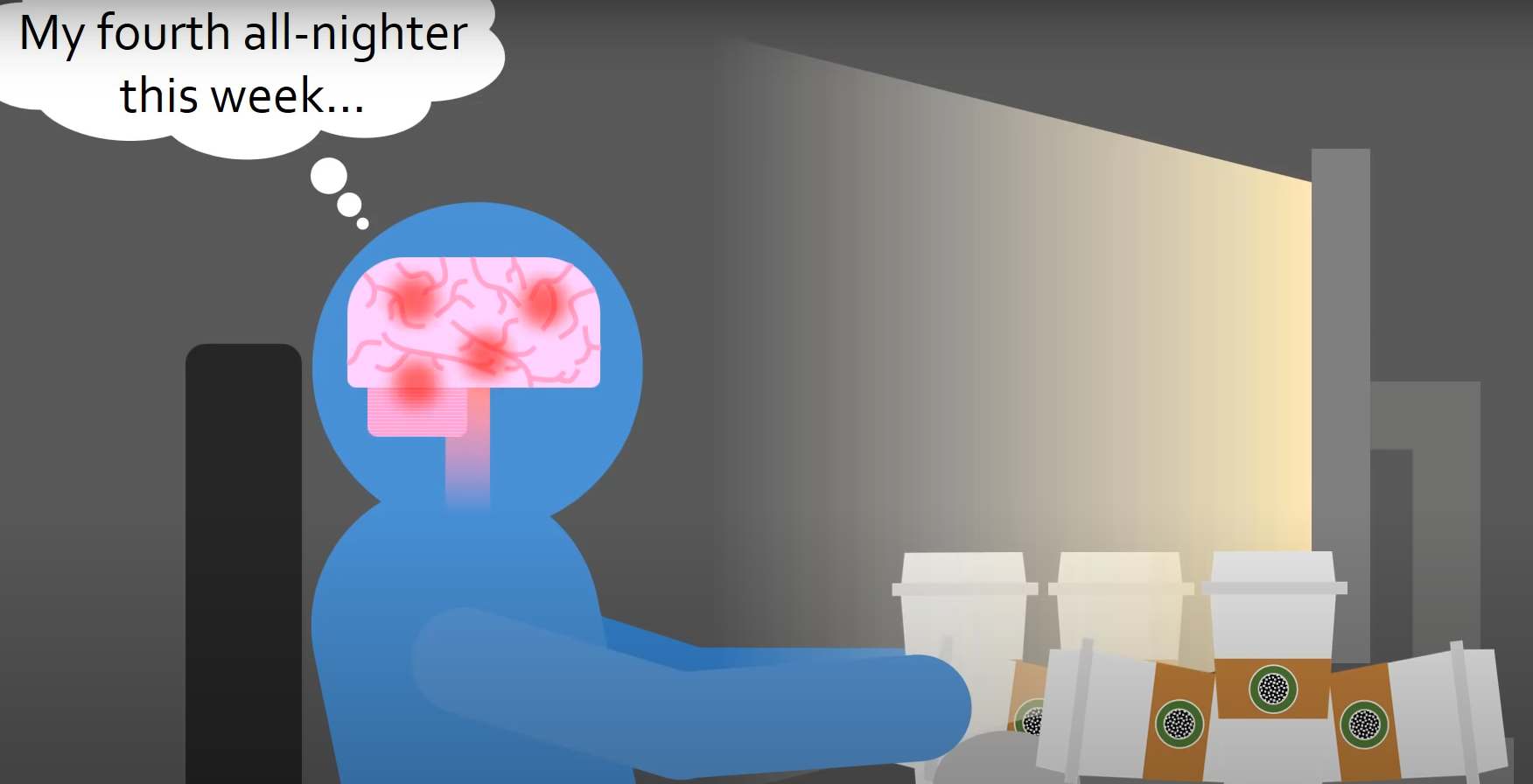
Effects of Sleep Loss caused by Sleep deprivation
Caffeine effects on spider webs

Mechanism
The most prominent is that it reversibly blocks the action of adenosine on its receptors and consequently prevents the onset of drowsiness induced by adenosine.
Mechanism of falling asleep
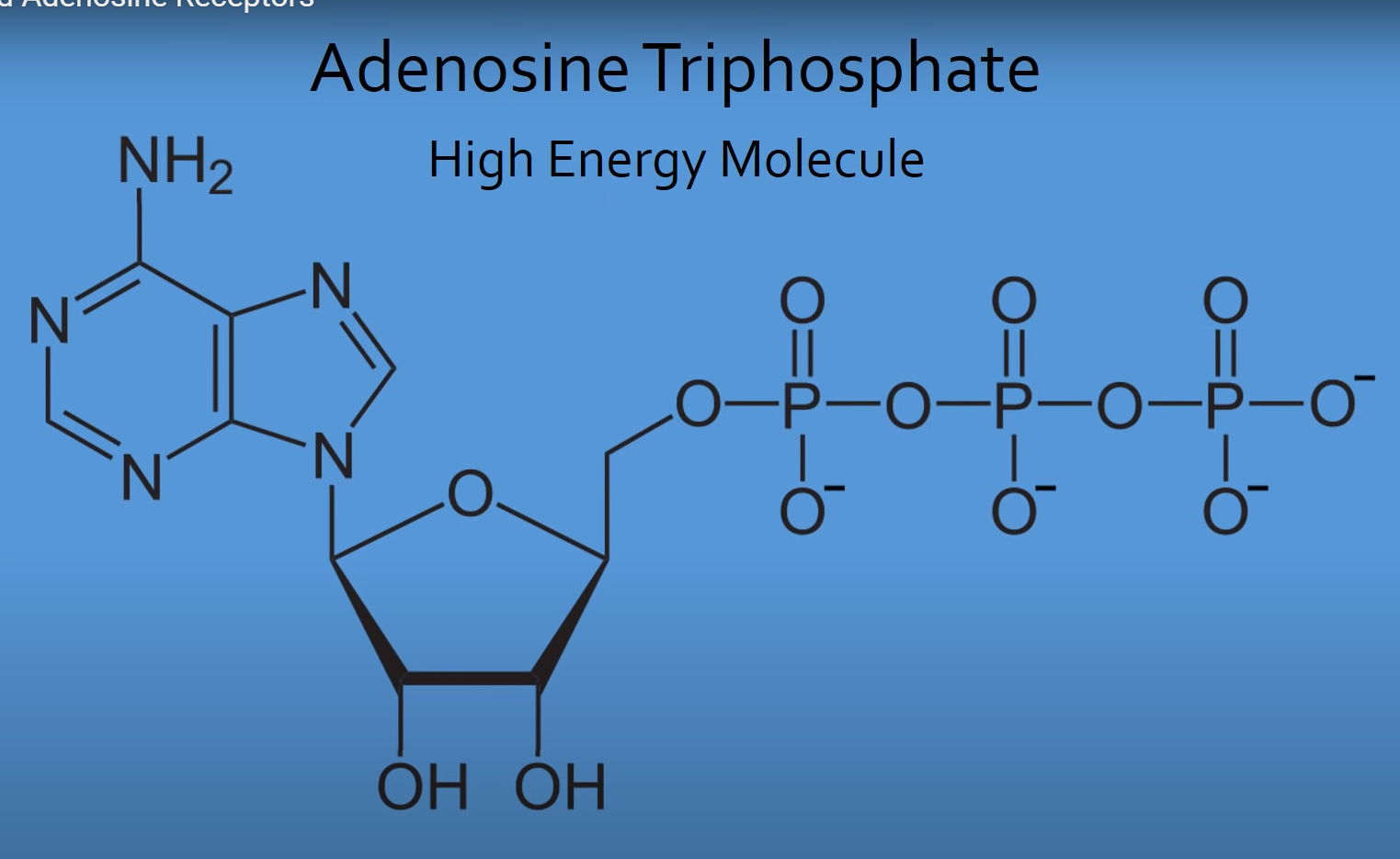
- Neuron brake Adenosine triphosphate (ATP) for Energy
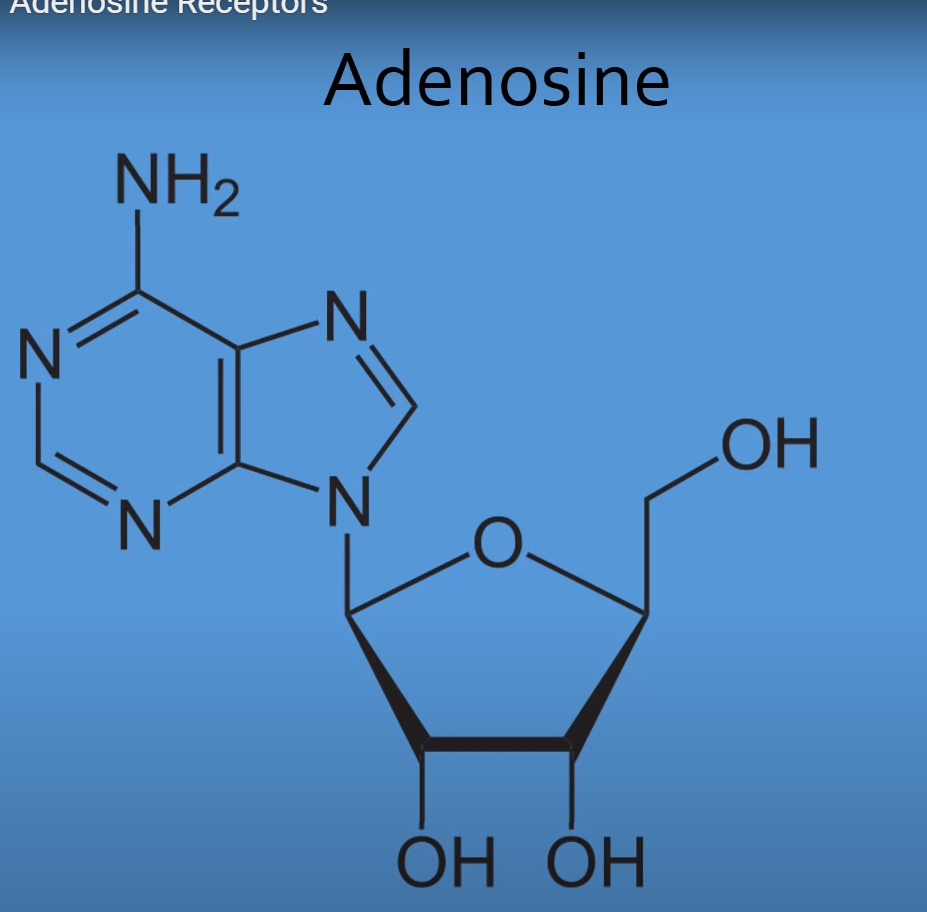
- This produce brakedown product Adenosine
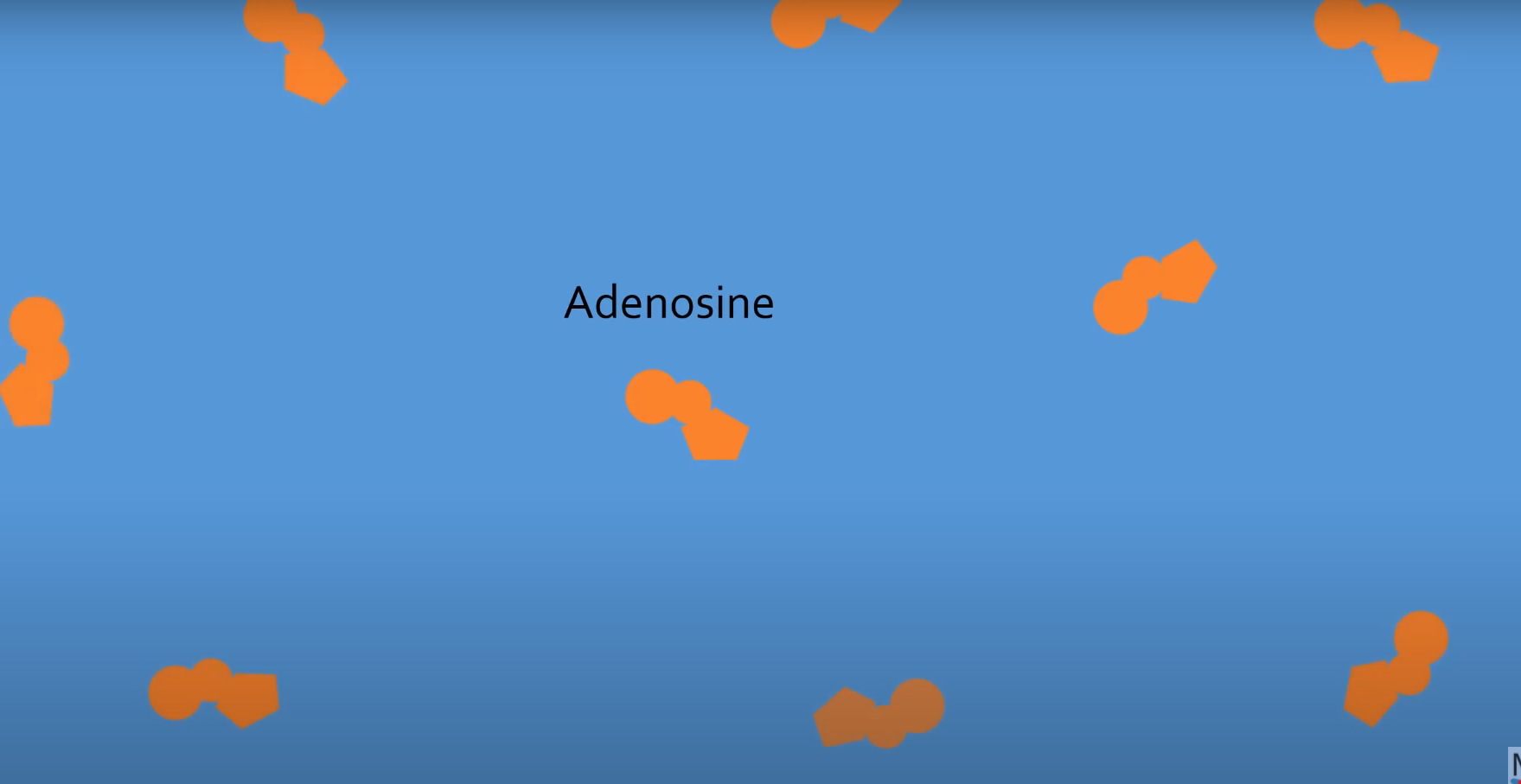
- Brain use energy through the day → increase adenosine levels
- Adenosine binds to Adenosine Receptor → activating wake-stimulating and sleep-prompting neurons
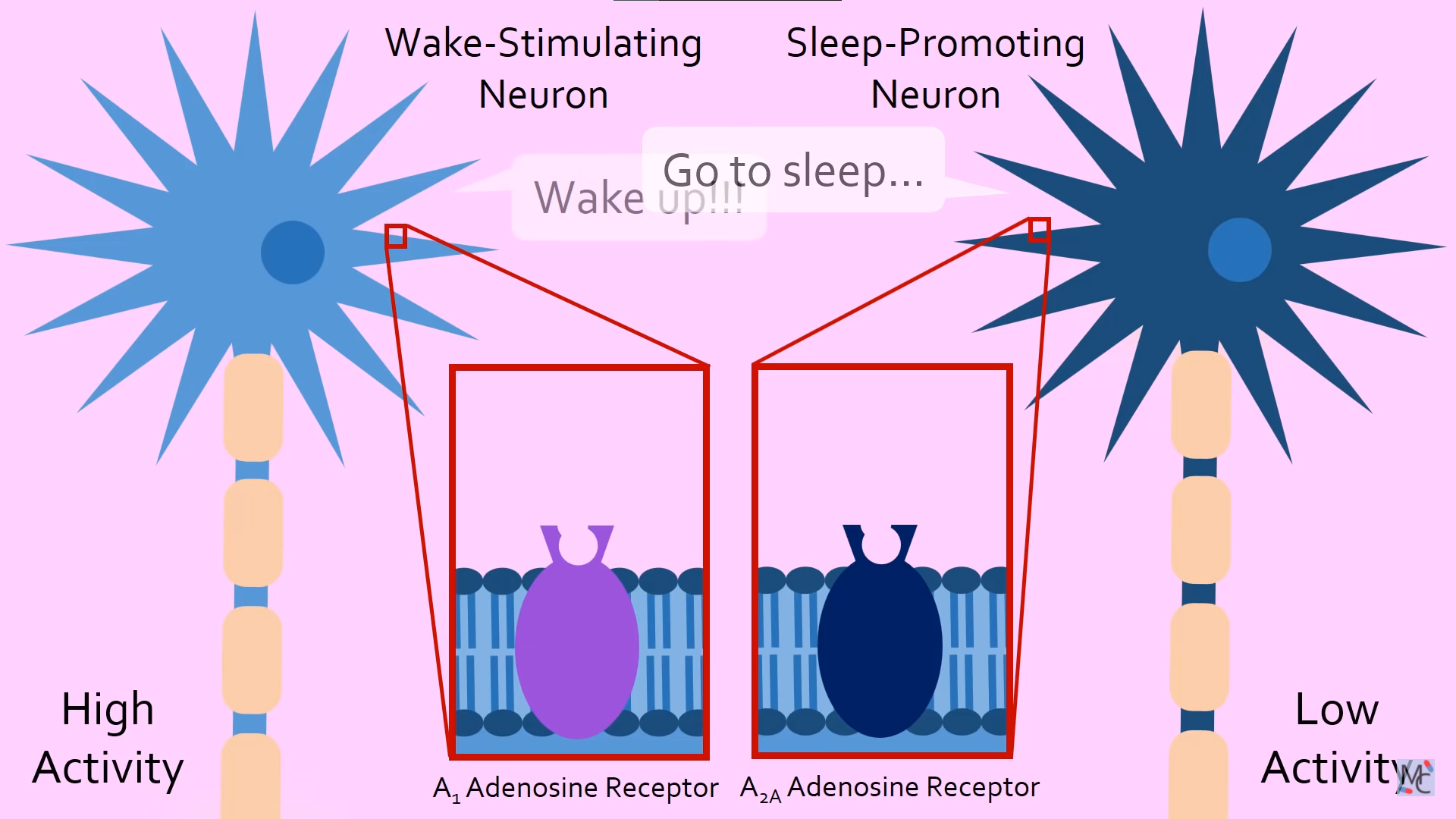
- High adenosine levels indicate that brain has been very active and need rest ⇒cause Sleepiness
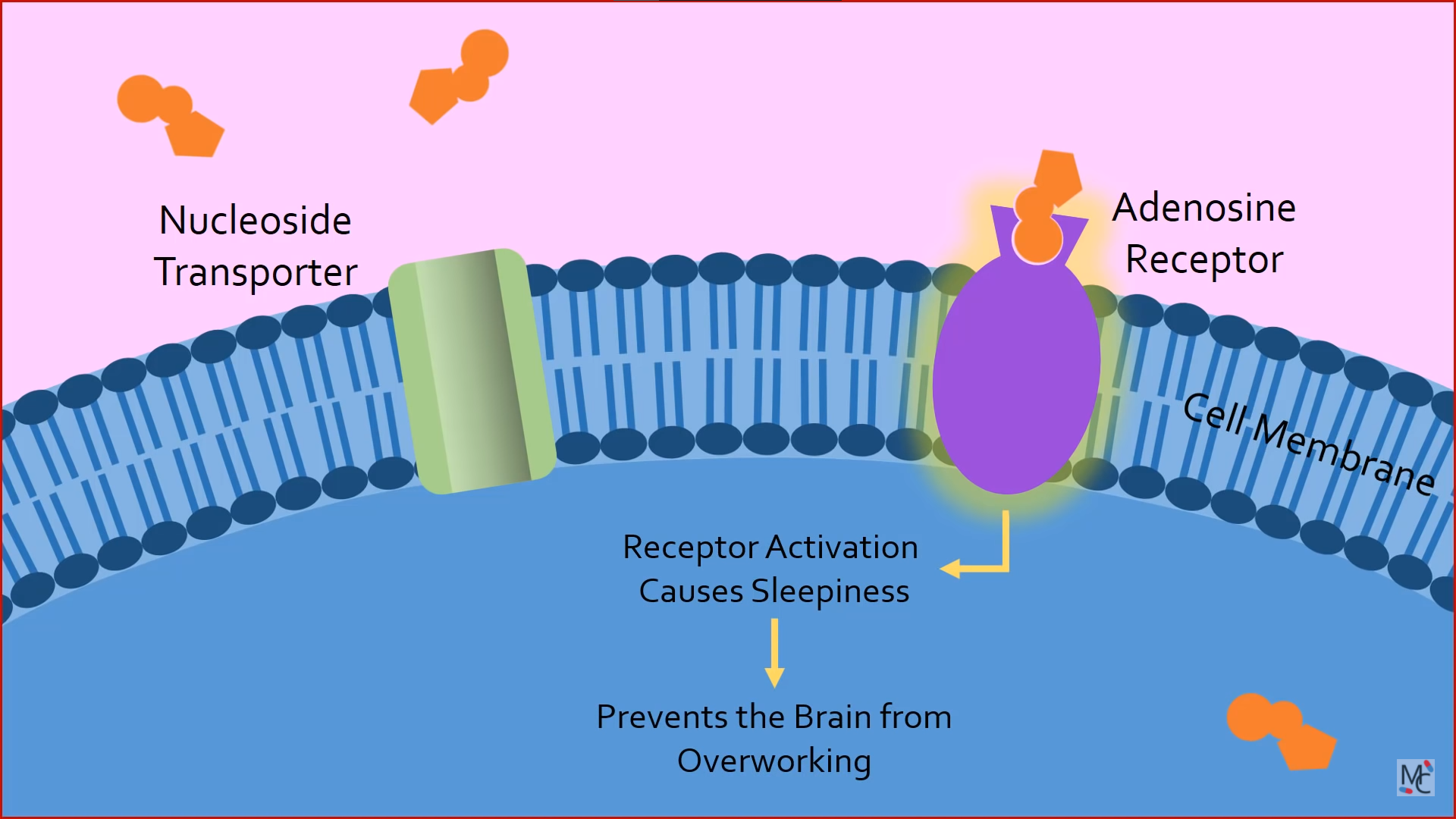
Mechanism of caffeine action
- Caffeine blocks adenosine receptors but not activate them → decrease sensitivity of neuron to adenosine
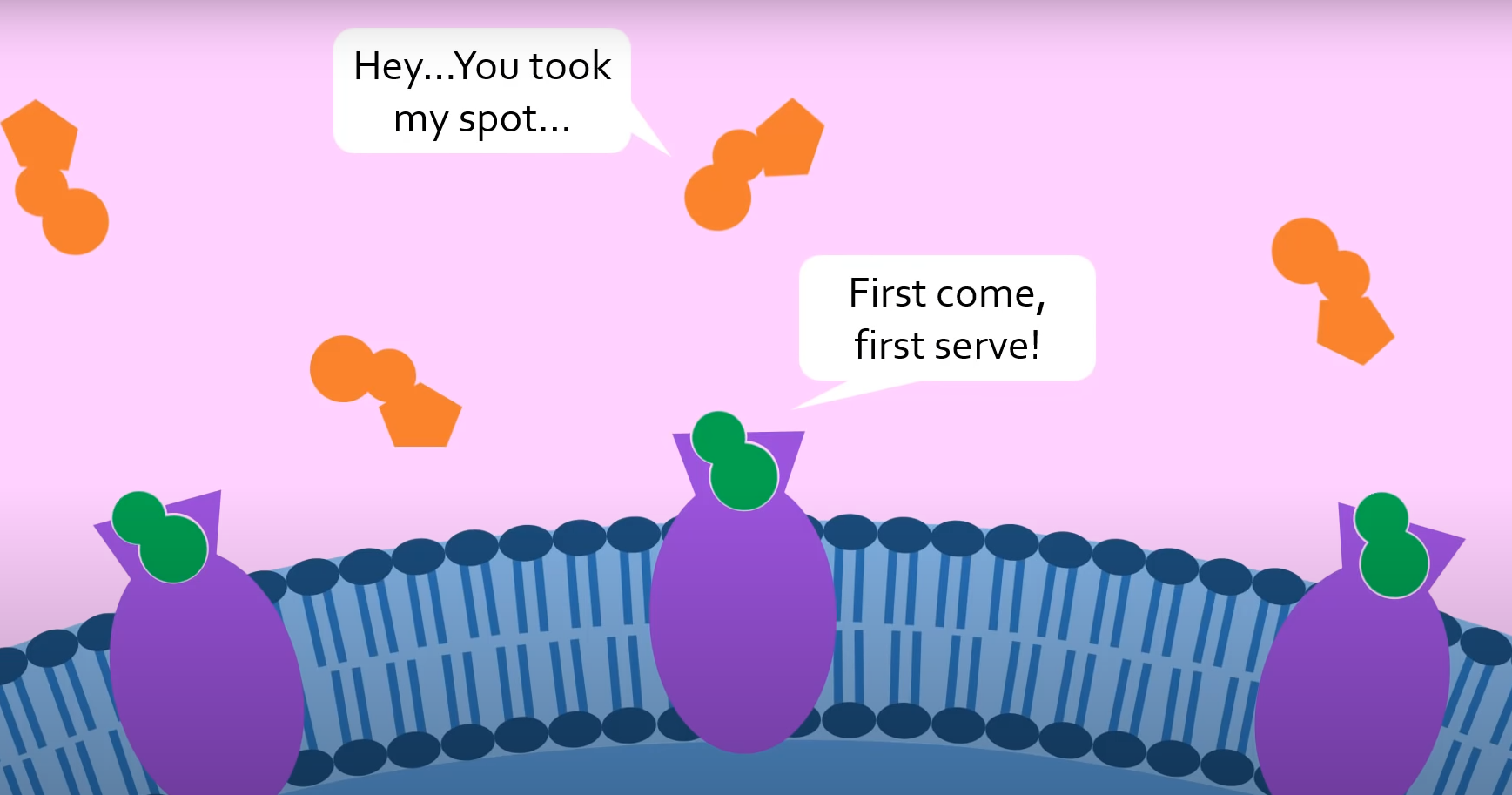
- Development of Caffeine Tolerance
Effect lasts 2-4 hours when body brakedown caffeine
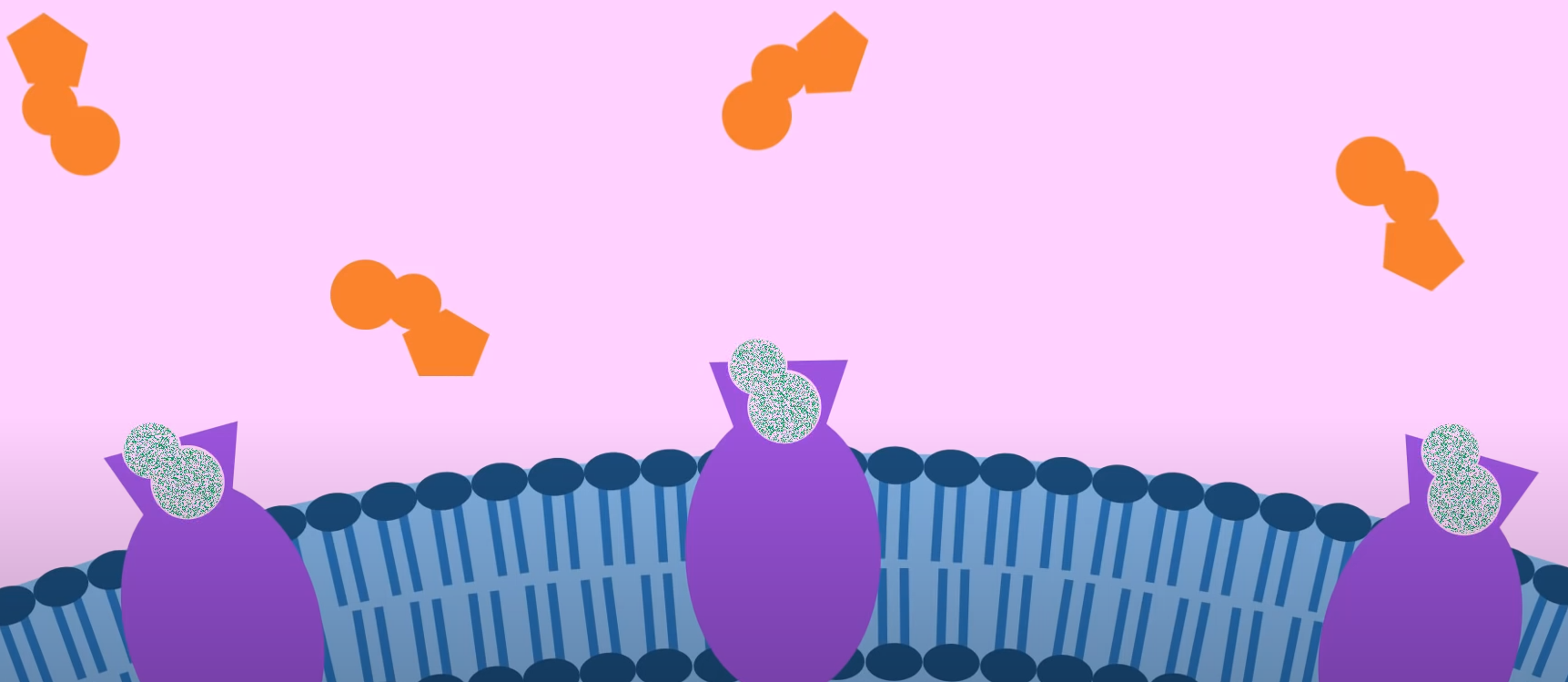 Neurons synthesis more adenosine receptors to compensate blocked receptors
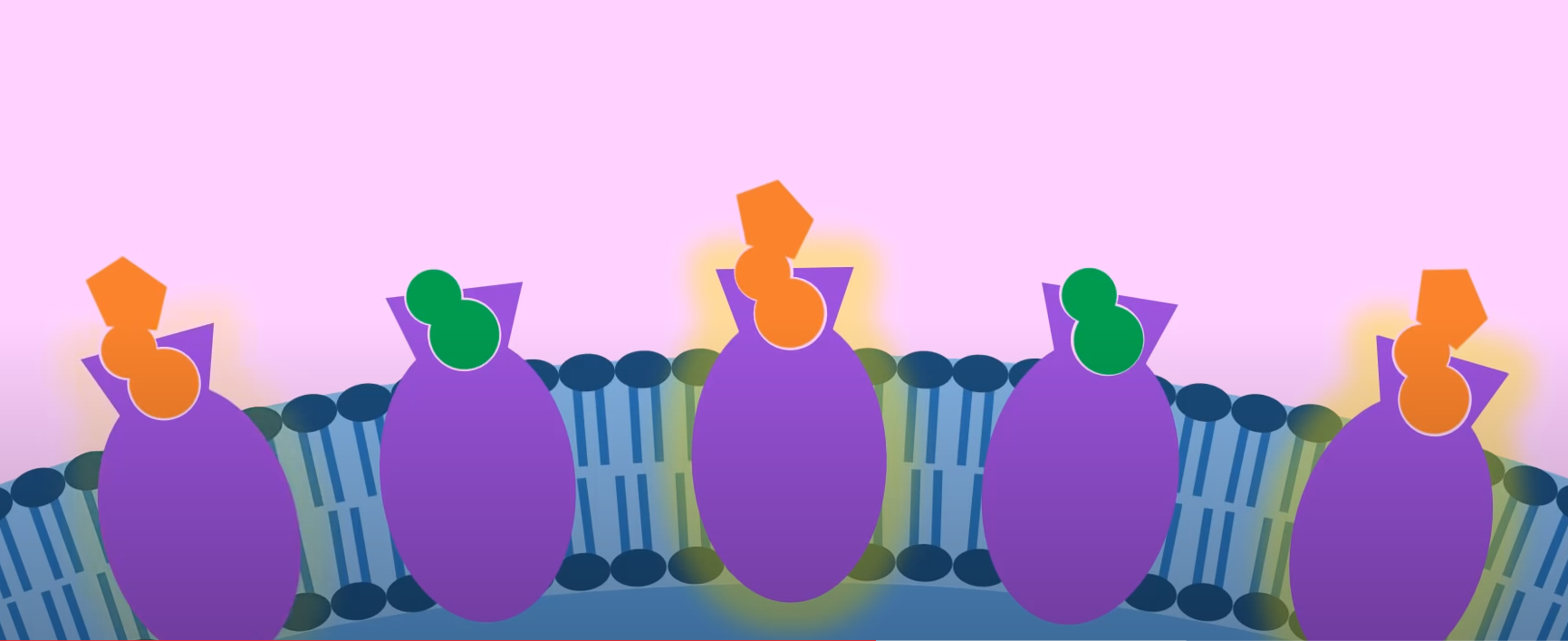 More caffeine needed to block additional receptors
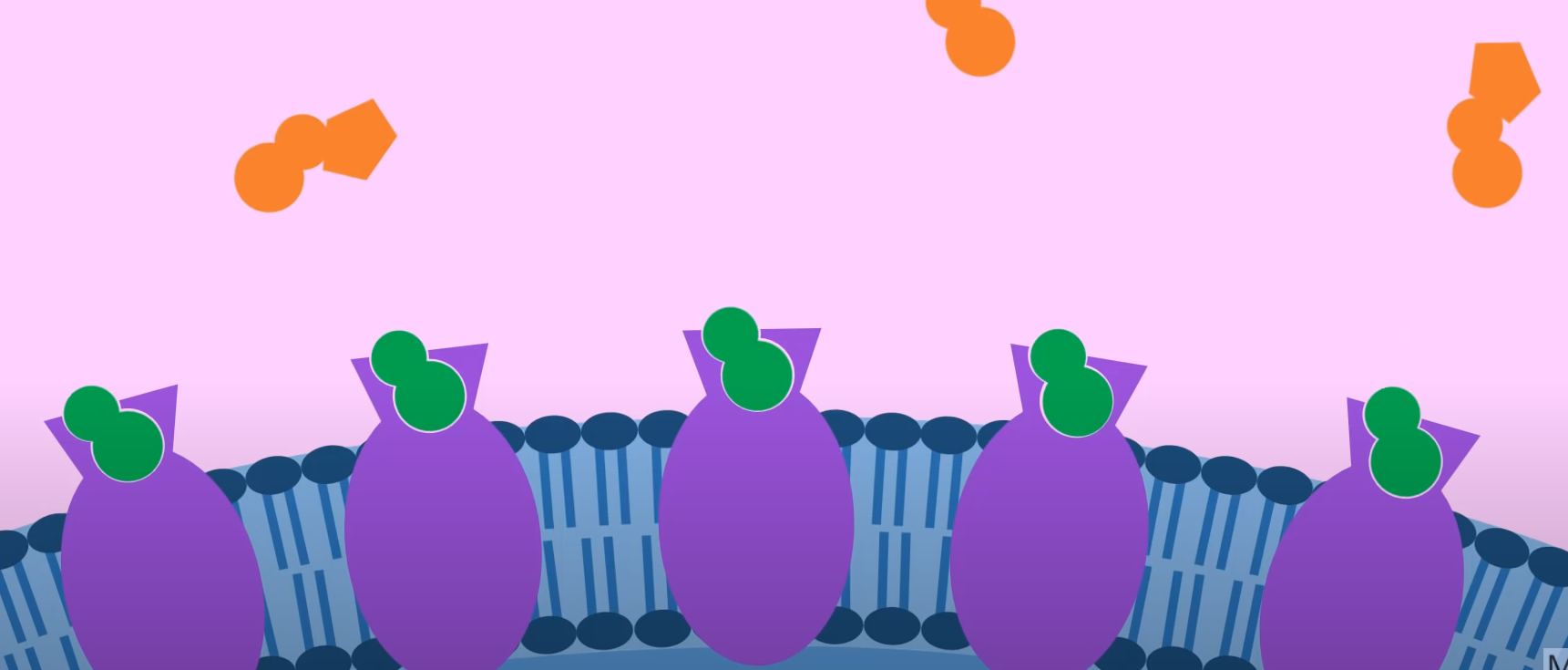 Suddenly stop taking caffeine intensify sleep inducing effect
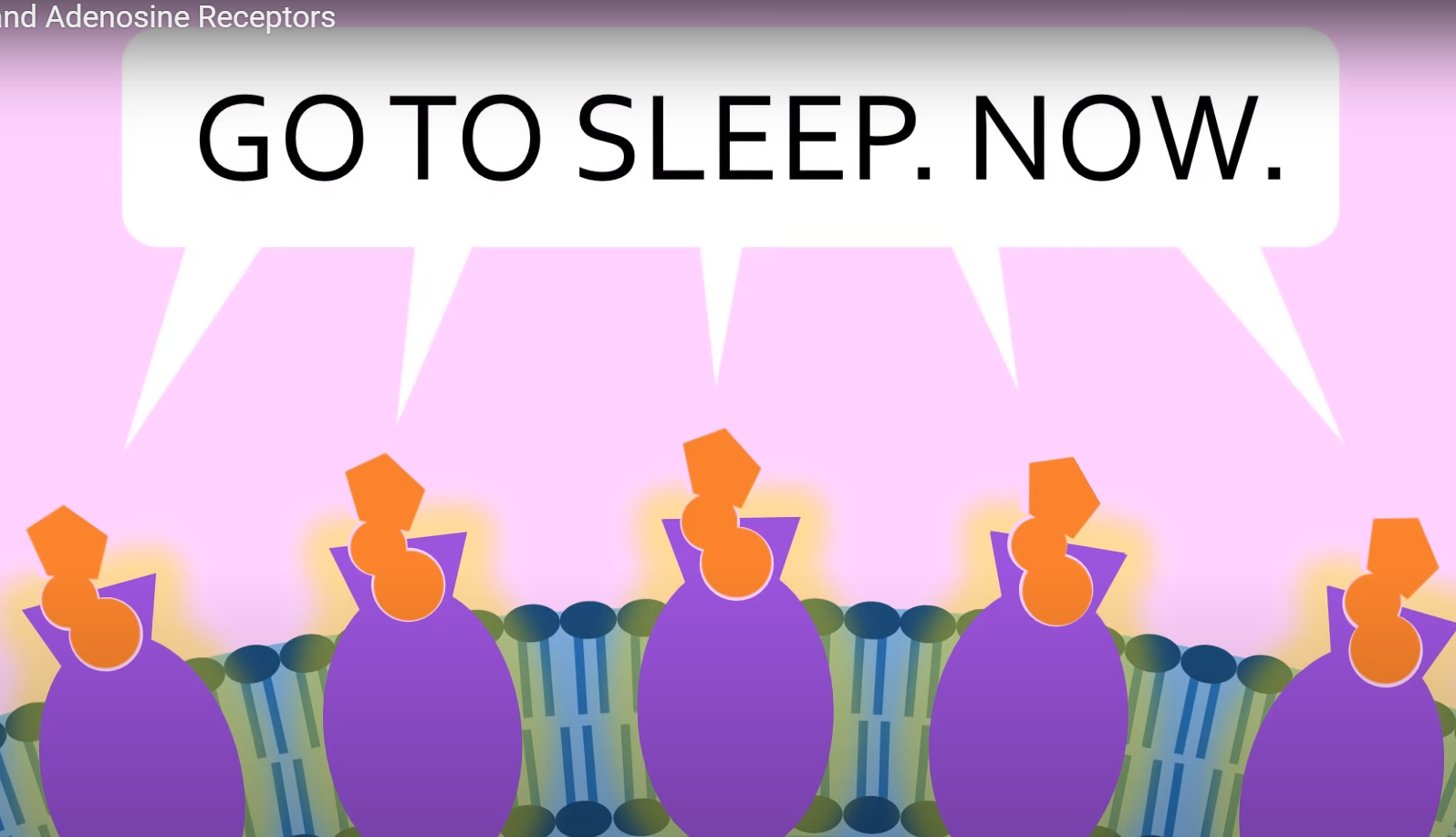 Results fatigue, drowsiness, irritability, difficult to concentrate
Overdose
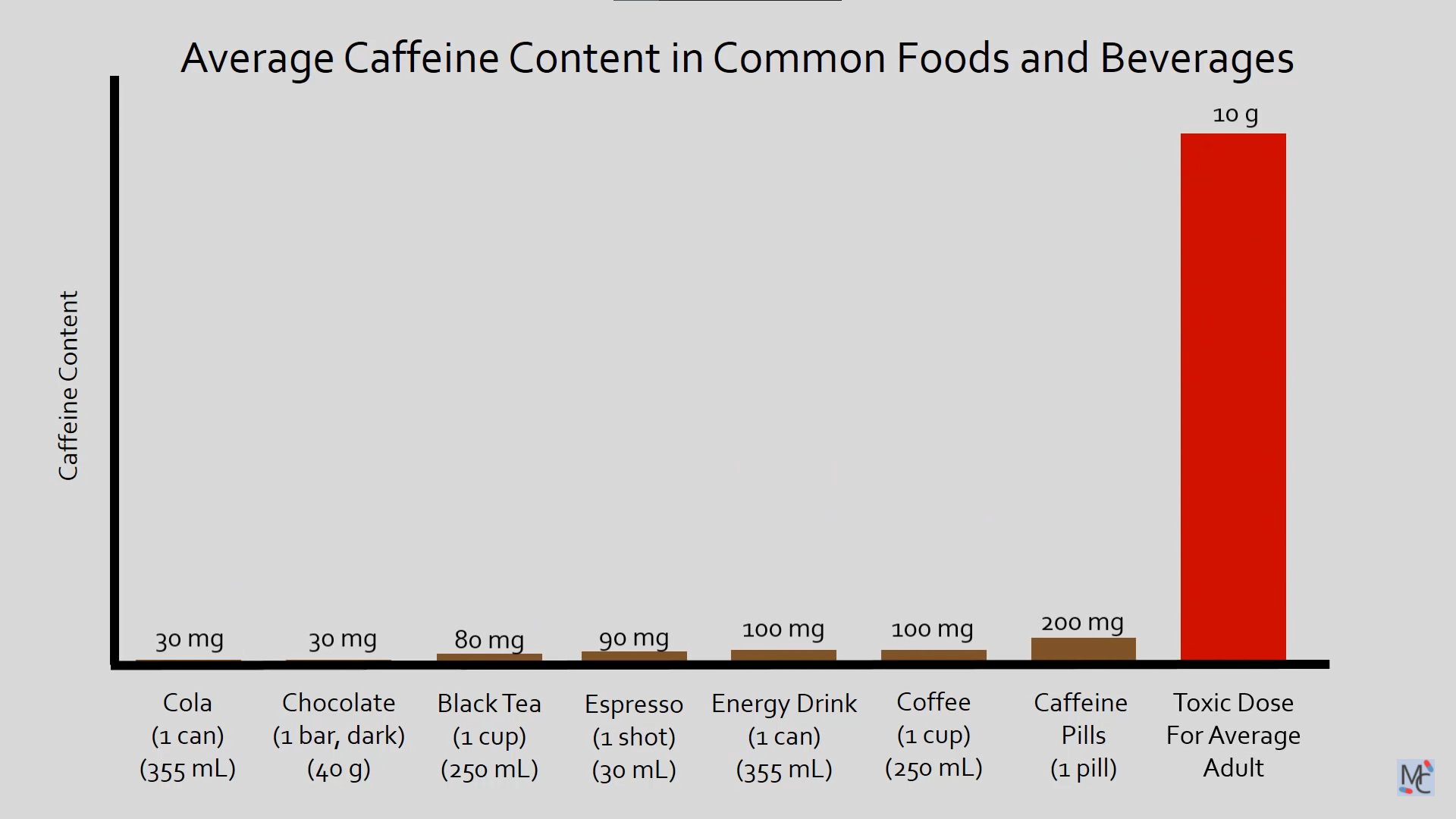
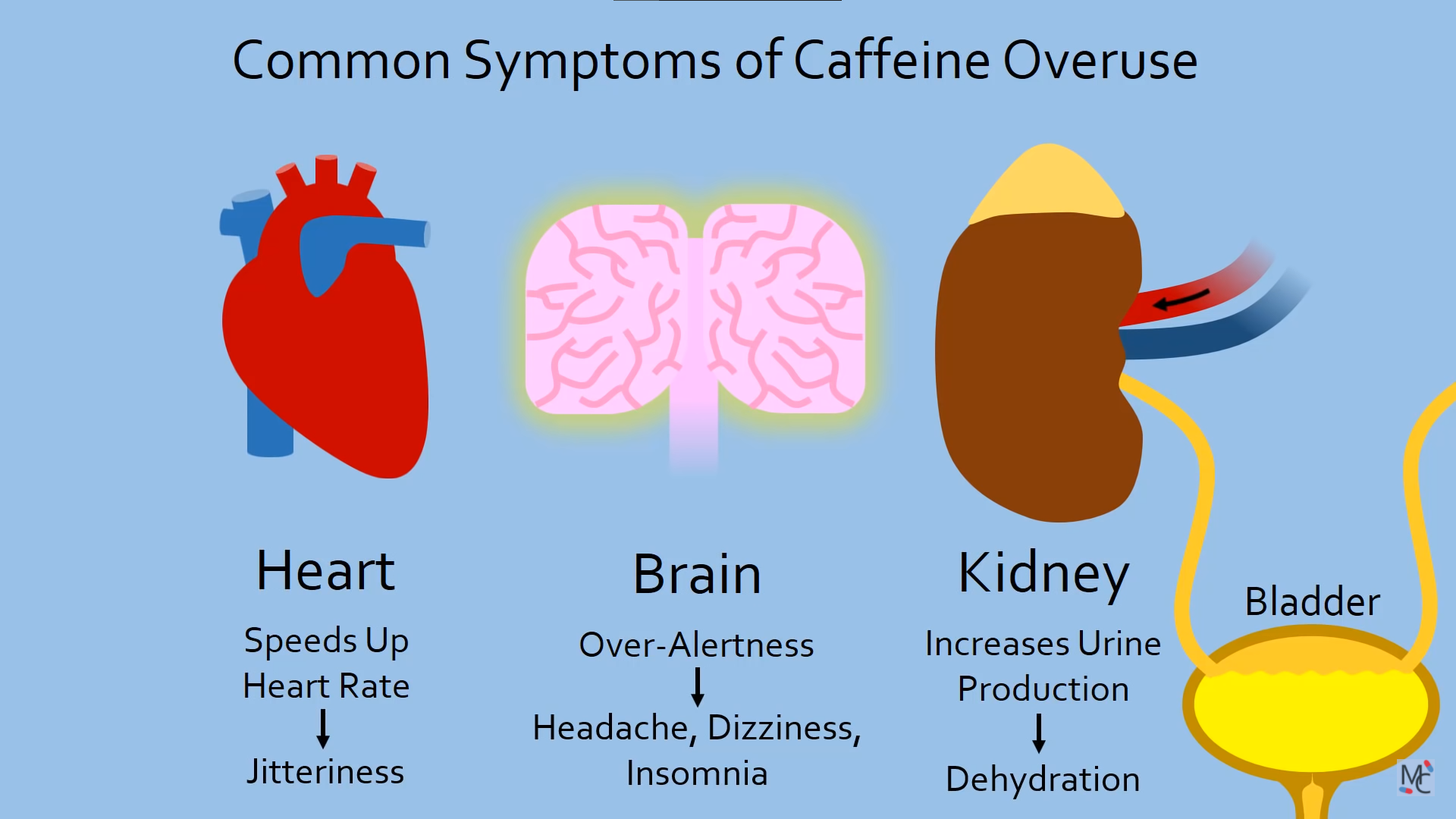 Lethal level 10g (about 100 cups of coffee)
Use in medicine
In combination with painkillers (such as aspirin and acetaminophen) and a chemical called ergotamine for treating migraine headaches, simple headaches and preventing headaches after epidural anesthesia.

Source
https://www.amazon.com/Psychology-11th-David-G-Myers/dp/1464140812 https://en.wikipedia.org/wiki/Caffeine https://www.youtube.com/watch?v=jOfquPE1cnU https://adf.org.au/drug-facts/caffeine/